
 By
By 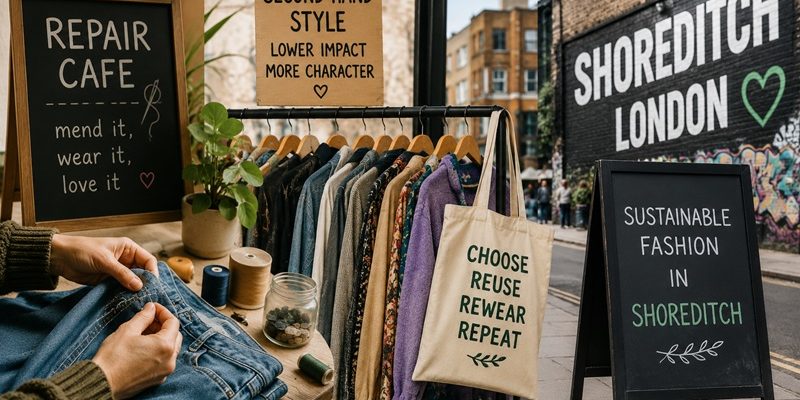
London’s fashion culture has always had a subversive streak — market stalls before luxury boutiques, DIY before designer, personal style before trend compliance. Shoreditch, specifically, has been the centre of the city’s most interesting sustainable fashion scene for years. In 2026, that scene has matured: repair cafes are busier than ever, second-hand shops have grown more sophisticated, and Londoners are spending thoughtfully rather than just spending less.
Here’s how to actually participate in it.
Why Shoreditch Leads London’s Sustainable Fashion Scene
Shoreditch isn’t just a trendy neighbourhood — it’s a genuine ecosystem. It sits near Brick Lane (a historic textile and market hub), Columbia Road, and Spitalfields Market, creating a cluster of second-hand, independent, and repaired fashion within walking distance. Add in the area’s density of creative workers, artists, and small designers, and you have the conditions for a repair-and-reuse culture that’s both practical and aesthetically driven.
Second-Hand Shopping in Shoreditch: Where to Go
Brick Lane Area
The Sunday Brick Lane market remains one of the most reliable places in London to find genuinely cheap second-hand clothing. The further down toward Bethnal Green you walk, the cheaper and more chaotic it gets — which is either exciting or overwhelming depending on your patience.
Best for: vintage denim, leather jackets, old band tees, workwear pieces.
Beyond Retro (Brick Lane)
One of London’s most established large-format vintage retailers. The selection is vast, turnover is high, and prices are fair — roughly £10–£40 for most pieces. Their Brick Lane location is worth a visit on a quieter weekday.
Rokit Vintage (Brick Lane)
A step up in curation from Beyond Retro, Rokit focuses on cleaner, more styled pieces. Expect to pay a bit more, but the quality control is noticeably higher.
Spitalfields Market
The covered market itself has permanent vintage sellers with more curated collections. Weekends are busy; Thursday mornings are quiet and worth the timing if you’re serious about finding something specific.
Repair Cafes in East London: What They Are and Where to Find Them
A repair cafe is a community-run space where volunteers help people fix broken items — including clothing. You bring in a torn coat, a broken zip, a fraying hem, and a volunteer seamstress or tailor helps you fix it, often for free or a small donation.
It’s one of the most genuinely sustainable fashion practices available, and East London has several well-established ones.
Hackney Fixers (Hackney)
Runs regular repair cafes in Hackney — check their schedule online, as sessions are typically monthly. Clothing and textile repairs are one of their core offerings.
The Restart Project
Based in London with events across East London, the Restart Project specifically focuses on electrical repairs, but their events often partner with textile repairers. Their community network points you toward the nearest clothing repair session.
St. Margaret’s House (Bethnal Green)
Runs community events including clothing and textile repairs through their community arts and sustainability programmes. Five minutes from Brick Lane.
Comparison: Vintage Shopping vs Fast Fashion in East London
| East London Vintage | High Street Fast Fashion | |
|---|---|---|
| Average cost | £8–£45 | £10–£40 |
| Uniqueness | High | Low |
| Construction quality | Variable but often higher | Low |
| Environmental impact | Low (extending life cycle) | High |
| Style flexibility | High — personal curation | Trend-dependent |
Expert Insight: The Alteration Economy
One thing experienced sustainable shoppers in Shoreditch know is that a good tailor near Brick Lane costs £8–£20 for most basic alterations. That means a £12 second-hand blazer that doesn’t quite fit becomes a personalised, well-fitting garment for around £25 total — usually better made and more distinctive than anything on a high street at that price. Factor alterations into your budget.
Pro Tips for East London Sustainable Fashion Shopping
- Go early on Sunday mornings to Brick Lane — by noon the best pieces at the cheapest prices have gone
- Bring cash — many market vendors and repair cafes are cash-preferred
- Ask about swap events — several Shoreditch-area community spaces run clothing swaps, where you bring pieces you no longer want and leave with someone else’s
- Check Depop sellers based in East London — many Shoreditch-area sellers are active on the app and will meet locally, cutting out postage entirely
- Visit Cheshire Street (off Brick Lane) for small independent vintage dealers with more niche curation
Common Mistakes to Avoid
- Buying because it’s cheap, not because it works for you — sustainable shopping isn’t about accumulation
- Skipping the condition check — East London markets can be disorganised; check seams, fabric, and zips before paying
- Ignoring repair cafes for “small” fixes — a broken zip or loose button is exactly what they exist for
FAQs: London Sustainable Fashion and Shoreditch
Q: Is Brick Lane market worth it in 2026? Yes, but manage expectations. The free-standing stalls outside have cheaper, less curated pieces; the indoor sections and shops like Rokit and Beyond Retro are curated but slightly pricier. Both have value.
Q: How do I find repair cafe dates near Shoreditch? Search the Repair Cafe International directory (repaircafe.org) with a London postcode, or follow Hackney Fixers and St. Margaret’s House on social media.
Q: Can you make a complete wardrobe from East London vintage? Many Shoreditch residents do. With patience over several visits, it’s entirely achievable, especially for outerwear, denim, and basics.
Q: Is second-hand clothing popular in London generally? Very much so. ThredUp’s annual resale reports consistently show the UK as one of the strongest second-hand fashion markets in Europe.
Conclusion
Sustainable fashion in Shoreditch isn’t a weekend activity or a trend — it’s a functioning alternative economy. Between Brick Lane’s market stalls, the curated vintage shops, East London repair cafes, and a community of people who take clothing seriously, there’s a real infrastructure here for dressing well without contributing to fast fashion’s waste.
Start with one Sunday morning at Brick Lane. You’ll likely find more than you expected.







Comments