
 By
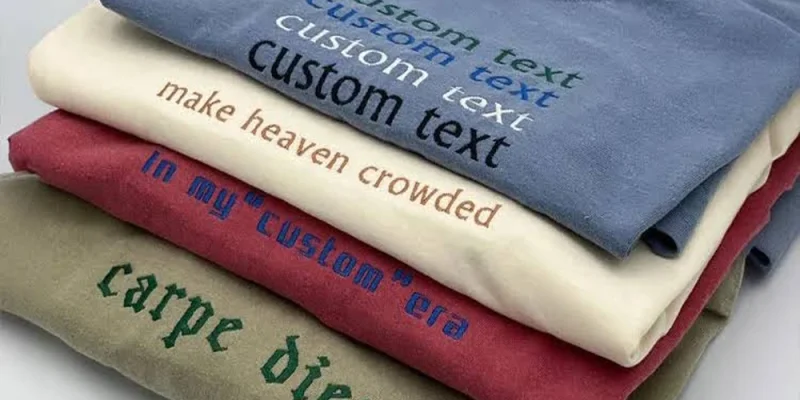
A good logo will help people identify your business, team, or brand. Before you put your logo onto clothing (shirt, jacket, uniform), you need to ensure the image is prepared for printing/production. An image that appears crisp on your computer screen may appear differently once it has been embroidered or printed.
The proper file, correct size, and amount of information will have an impact. This is what you need to consider prior to submitting your logo to a printing or embroidery company.
Start with a High-Quality Logo File
The quality of the initial image you create will impact the outcome of the product. Images that are blurry and/or have a low resolution may cause the product to lose details during the manufacturing process.
In order to achieve optimal results, please submit your artwork as a vector file format (AI, EPS, SVG) whenever possible. This will ensure that when you resize the image, it does not lose any resolution.
If you only have a PNG or JPEG, find out from the provider if that type of file will be okay. Although a high-resolution image may work well when being printed, it may take some additional steps to prepare the file for embroidery.
Why Digitising Matters for Embroidery
Before you can upload a logo to be embroidered, it must undergo a process called digitising.
Digitising converts your logo into sewing commands so a computer controlled sewing machine can understand what to do with the information. The digitised image will tell the computer controlled sewing machine exactly where to place each stitch, which way to move the needle, and how much thread is required.
Logo embroidery in Melbourne will usually require changes to the artwork, depending on what type of fabric you’re using, how large your logo is, and which kind of stitches you would like to use.
Good digitising helps prevent common problems such as:
- Uneven stitching and loose threads.
- Small text becoming hard to read.
- Gaps between design elements.
- Fabric pulling or puckering.
- Poorly shaped letters and symbols.
Keep Small Details Under Control
When it comes to reproducing your logo on fabric, not all of the details that make up the design will look good when printed. For example, very thin lines, very small print, or very detailed designs may be hard to replicate.
In general, the less complicated the design is, the better it will appear when embroidered. It may be necessary to remove some of the smaller details or enlarge the text.
The printing process allows for multiple colour changes, fine line detail, and complicated designs. But the final design is ultimately dependent upon how the print was created and on the type of clothing used.
Choose the Right Size and Printing Method
In addition to where you place your logo, the size of your logo has a significant impact on how your design will appear. A large logo printed on the back of the shirt would be ideal for promotional purposes, whereas a smaller logo placed on the chest area of the shirt would be better suited for use as part of a uniform.
The use of heat transfer printing provides an alternative method of applying colourful and intricate designs to clothing.
Before going into full-scale production, work out the details of the size, location of the design on the garment, fabric selection, and final look you want to achieve with your manufacturer. By doing so, you can prevent expensive modifications at a later stage.
Get Your Logo Ready for a Professional Finish
A good start to making a great looking piece of clothing is having your artwork correctly prepared. You want to make sure you use a clean file, that your designs have the correct amount of detail based upon the way you will be producing the item, and that you are certain of the size of the product prior to approval.
Proper preparation ensures that regardless of whether you decide on a logo embroidery Melbourne to achieve a raised appearance or if you use a heat transferred printing to display vibrant artwork, the end result will be a crisp, clean and professional looking logo.





Comments